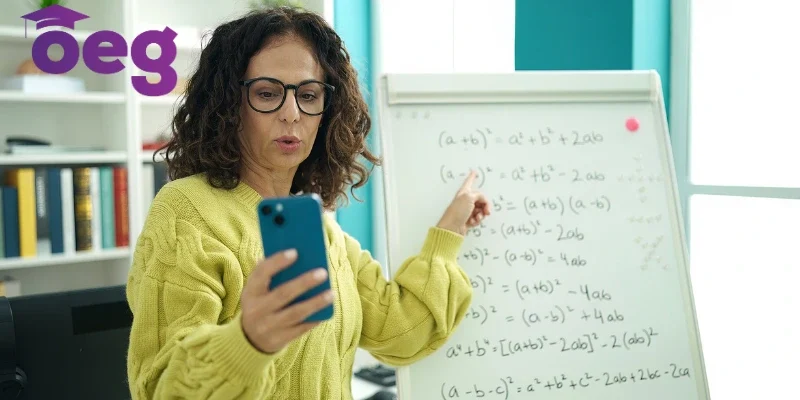
Quick answer: The best way to get unstuck in calculus is one-on-one online tutoring that moves at your pace, because the subject builds cumulatively: a shaky grasp of limits makes derivatives hard, and weak derivatives make integration harder. Pick a tutor with real teaching experience, not just knowledge, who explains in clear steps and checks your understanding, come to sessions with specific problem areas like related rates or convergence tests, set concrete goals, and build a semester-long study plan instead of treating each session as a one-off. Consistency with the same tutor is what turns dread into confidence.
Calculus can feel like a mountain to climb, especially when derivatives, integrals, and infinite series arrive all at once. That’s why so many students and parents start searching for a calculus tutor online instead of settling for a one-size-fits-all classroom pace. Learning one-on-one, from home, on a schedule that actually fits your life, changes how quickly concepts click. This guide walks you through what to look for and how to prepare so you get real value from every session.
Why Students Search for Online Calculus Help
Students turn to a calculus tutor online for several practical reasons. Traditional classrooms move at a fixed pace, and a single lecture rarely leaves room for every question. Working one-on-one with a dedicated instructor lets you pause, rewind, and revisit a concept until it truly makes sense. You also gain access to specialists who focus specifically on calculus rather than general math tutoring, which matters when you need targeted derivatives help or a clear explanation of a tricky proof.
Online learning also removes geographic limits entirely. Instead of being restricted to tutors within driving distance, families can choose from instructors across the country, or even internationally, who specialize in exactly the course a student is taking. This wider pool makes it far easier to match a student’s learning style, pace, and personality with an instructor who genuinely fits.
Key Qualities to Look For
Not every calculus tutor online will suit your learning style, so evaluate candidates carefully before committing to a package of sessions.
Strong Subject Mastery
Look for a tutor who has taught calculus at the level you need, whether that’s high school, AP, or college coursework. A tutor who understands limits calculus, continuity, and the formal definition of a derivative can build your foundation properly instead of skipping straight to formulas.
Teaching Experience, Not Just Knowledge
Knowing calculus and explaining it clearly are different skills. Ask about the tutor’s experience working with students who struggled with similar topics, whether that means stepping in as an integrals tutor for someone stuck on techniques of integration, or guiding a learner through differential equations for the first time.
Clear Communication and Patience
A good calculus tutor online breaks problems into manageable steps and checks for understanding before moving forward. Patience matters as much as expertise, since confusion often comes from a missed foundational concept rather than a lack of effort.
Flexible Scheduling and Reliable Technology
Since sessions happen virtually, confirm the platform works smoothly on your devices. A dependable calculus tutor online uses a stable video platform, a shared digital whiteboard, and screen sharing so you can work through problems together in real time.
Positive Reviews and Verified Results
Check reviews, ratings, and references where possible. A track record of helping students raise grades or pass exams says more than a polished profile alone.
Questions to Ask Before You Hire a Tutor
Before committing, ask these questions:
- What is your teaching background and subject specialization?
- How do you structure a first session to assess my current level?
- Can you offer AP calculus help if I’m preparing for the AP exam?
- Do you cover multivariable calculus if I move into higher-level coursework?
- What tools do you use during virtual sessions?
- How do you measure progress over time?
These questions reveal whether a calculus tutor online can meet your specific academic goals rather than offering generic instruction.
How to Prepare for Your First Session
Preparation makes tutoring far more productive.
Gather Your Materials
Have your textbook, class notes, syllabus, and any graded assignments ready. Sharing recent quizzes or homework with mistakes highlighted helps your tutor pinpoint exactly where confusion begins.
Identify Specific Problem Areas
Rather than saying “I don’t understand calculus,” pinpoint exact topics: related rates, optimization, the chain rule, or convergence tests for series. Specificity lets your calculus tutor online target instruction efficiently instead of reviewing everything from scratch.
Set Clear Goals
Decide what success looks like, whether that’s passing an upcoming exam, improving weekly homework scores, or building confidence before AP testing season. Clear goals help your tutor design sessions around outcomes you actually care about.
Test Your Technology
Check your camera, microphone, and internet connection before the first session. A few minutes of setup prevents wasted time and frustration once the lesson begins.
Building a Study Plan With Your Tutor
Once you’ve found the right fit, work together to build a calculus study plan that spans the semester rather than treating each session as an isolated event. A structured plan typically includes:
- A review of prerequisite algebra and trigonometry skills
- A topic-by-topic breakdown aligned with your course syllabus
- Practice problem sets between sessions
- Regular check-ins to track improvement and adjust pacing
A calculus tutor online who commits to this kind of long-term planning delivers more consistent results than one who only reacts to whatever homework is due that week.
Specialized Support Across Every Calculus Topic
Calculus covers a wide range of subtopics, and the strongest tutors adapt to wherever a student is struggling. Early in a course, learners often need clarity on limits and continuity as the foundation for everything that follows. Later, the focus often shifts to optimization and related-rates problems, then to techniques of integration for area, volume, and accumulation functions. Advanced students eventually tackle more complex modeling equations and, in college-level courses, functions involving several variables at once. A capable calculus tutor online adjusts explanations and pacing as these topics grow more complex.
Preparing for Major Exams
Students preparing for standardized testing benefit enormously from working with a calculus tutor online who understands exam format, timing, and scoring rubrics. A tutor familiar with free-response questions and multiple-choice strategies can simulate exam conditions, review past prompts, and teach time-management techniques that reduce test-day anxiety.
Making the Most of Every Session
To get maximum value from tutoring:
- Come with questions written down in advance
- Attempt problems independently before the session so your tutor can see your thought process
- Take notes during the lesson rather than relying on memory afterward
- Review session recordings if your tutor provides them
- Practice consistently between sessions rather than cramming before deadlines
Consistency turns occasional help into real, lasting improvement.
Red Flags to Watch For
Not every tutoring arrangement works out, and recognizing warning signs early saves time and money. Be cautious of instructors who cannot clearly explain their teaching approach, who rush through problems without checking your understanding, or who rely solely on giving answers rather than walking through reasoning. A tutor who avoids questions about credentials, cannot provide a trial session, or pressures you into a long-term contract before you’ve experienced a single lesson deserves extra scrutiny. Reliable instructors are transparent about pricing, cancellation policies, and what a typical session looks like from start to finish.
It also helps to watch how a tutor handles a wrong answer. A strong educator treats mistakes as teaching opportunities, walking back through the reasoning to show exactly where things went off track. A weaker one simply supplies the correct answer and moves on, which leaves the underlying misunderstanding untouched and likely to resurface on the next exam.
The Long-Term Value of Consistent Support
Calculus rarely improves through last-minute cramming. The subject builds cumulatively, with each new topic resting on mastery of the one before it. A student who struggles with limits will likely struggle with derivatives, and a shaky grasp of derivatives makes integration far harder than it needs to be. Regular sessions with the same instructor create continuity, since the tutor already understands a student’s strengths, common mistakes, and preferred explanations, rather than starting from zero each time.
This continuity also builds confidence. Students who once dreaded calculus often describe a turning point after a few consistent weeks of guided practice, once problems that used to feel impossible start to feel routine. That shift in mindset frequently matters as much as the academic improvement itself, since confidence carries forward into exams, future courses, and even career paths in STEM fields.
Frequently Asked Questions
How much does a calculus tutor online typically cost? Rates vary widely based on experience, credentials, and session length, generally ranging from affordable student-tutor rates to higher fees for specialized instructors with advanced degrees.
How often should I meet with a tutor? Most students benefit from one to two sessions per week, with additional sessions added before major exams.
Can a tutor help with college-level courses, not just high school? Yes. Many tutors specialize in both high school and university-level calculus, including advanced topics covered in later semesters.
What if I only need help with one specific topic? Most tutors offer flexible, topic-focused sessions rather than requiring a full-course commitment, so you can get targeted support exactly where you need it.
Conclusion
Finding the right virtual calculus instructor takes a bit of research, but the payoff is worth it: clearer explanations, personalized pacing, and steady progress toward your academic goals. Prepare your materials, define your goals, and communicate openly about where you’re stuck, and you’ll turn every session into real, measurable growth.